Guides
What does a podcast editor do? The job, step by step
What does a podcast editor do: the job step by step from raw tracks to a publish-ready file, plus the scope, file and contract failures that cost a season.
What to take away
- A podcast editor handles raw audio, noise and room tone, filler words, levels, mixing, mastering, and delivery of a publish-ready file.
- Most editing failures are not technical. They are scope failures: nobody wrote down who owns the file, who approves the cut, or what happens to raw tape.
- The expensive mistakes surface late. Missing session files, an unassigned copyright, and a host who never heard the final mix can sit unnoticed for months.
- A one-page agreement covering deliverables, turnaround, revisions, and file custody prevents nearly all of them.
- The Bureau of Labor Statistics puts sound engineering technicians at a mean annual wage near $71,000, which frames why per-episode editing rates vary so widely.
Most creators hire an editor because the show sounds bad, then discover the job is bigger than noise removal. The editor's real work is deciding what the episode is, cutting toward that, and handing back a file that meets a distributor's technical bar.
The job, step by step
For a typical US interview show, an episode moves through the same stages in the same order, whoever does the work:
- Ingest and back up.Collect every raw track, local recordings from remote guests included, and copy them somewhere other than the working drive before touching anything.
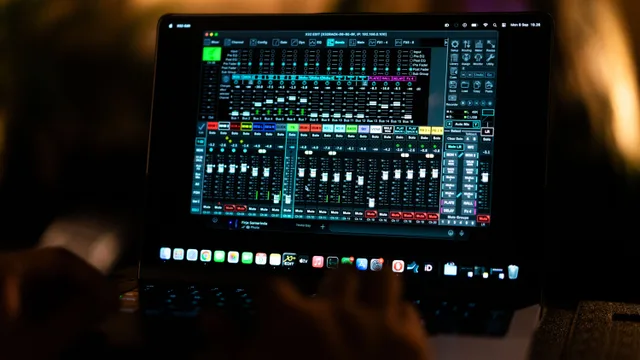
- Sync and organize.Line up the host and guest tracks in one multitrack session in a tool such as Adobe Audition, Reaper, Pro Tools or Descript, and label each track.
- Repair.Reduce noise, hum, clicks and room echo, and keep a stretch of room tone to fill gaps so cuts do not sound like holes.
- Content edit.Cut false starts, tangents and repeated answers so the episode follows what the show is about, then remove filler words and long pauses without flattening how people speak.
- Mix.Balance the voices against each other, add intro and outro music, beds and stingers, and place the sponsor read with its disclosure intact.
- Master.Bring the whole file to the loudness target and format in the agreed spec sheet, so it sits at the same level as the episode before it.
- Quality check.Listen through, or at least spot-check every cut and transition, on headphones and on a phone speaker.
- Deliver and hand over.Export the publish-ready file, and hand back the session and raw files on the agreed date.
Show notes, transcripts, chapter markers, video clips and publishing to Apple Podcasts, Spotify or the hosting platform are separate jobs. They are often done by the same person, but only when the scope names them.
The costly one: no written scope
The situation is familiar. A host sends a two-hour raw recording and asks for "the usual." The editor removes ums, balances levels, adds music, and returns a file. Three months later the host asks for chapter markers, a transcript, and a video cut, all of which the editor never agreed to do.
Deliverable Scope: Standard vs Extra
Deliverable
- Noise and room tone cleanup
- Standard
- Filler word removal
- Standard
- Music beds and stingers
- Sometimes
- Transcript
- Rarely
- Video or social clips
- Rarely
Typical inclusion
- Noise and room tone cleanup
- -
- Filler word removal
- -
- Music beds and stingers
- Licensed tracks
- Transcript
- Per minute fee
- Video or social clips
- Separate rate
Often extra
- Noise and room tone cleanup
- Filler word removal
- Music beds and stingers
- Transcript
- Video or social clips
The consequence is a stalled feed. Episodes slip, the host pays twice for work already done, and the relationship ends mid-season. The prevention is a scope line in the agreement that lists each deliverable by name.
| Deliverable | Typical inclusion | Often extra |
|---|---|---|
| Noise and room tone cleanup | Standard | - |
| Filler word removal | Standard | - |
| Music beds and stingers | Sometimes | Licensed tracks |
| Transcript | Rarely | Per minute fee |
| Video or social clips | Rarely | Separate rate |
The ones that look fine at first
These pass review in week one and only bite later.
Three Fixes for Hidden Failures
- Sign a work-for-hire clause assigning edited audio
- Cap revisions at two and price the rest
- Agree a loudness, sample rate and channel spec
The unassigned copyright. A freelancer edits an episode, and nobody signs a work-for-hire clause. Under US law the creator of the work holds the copyright unless it is transferred in writing, and the US Copyright Office explains the ownership split between employees and contractors. Its Circular 30, Works Made for Hire, quotes the definition in section 101 of the Copyright Act: a work made for hire is a work prepared by an employee within the scope of his or her employment, or a work specially ordered or commissioned that fits the categories the Act lists. A freelance edit does not become the show's property by being paid for. The fix is a clause that assigns edited audio to the show.
The silent revision loop. The agreement says "revisions included" without a number. The host requests seven passes. The editor either absorbs the cost or stops responding. Cap revisions at two and price the rest.
The missing delivery spec. The editor exports at 128 kbps mono because that is their default. The host uploads it. Loudness, sample rate, and channel layout all matter to distributors, and a spec sheet agreed up front removes the argument.
A file that plays fine on a laptop can still fail a distributor's loudness target. Test the export before the deadline, not after.
The ones that only show up later
File custody. The editor keeps the session files and the raw tape on a personal drive. Two seasons in, they leave, and the host has no multitrack to re-cut an episode for a sponsor. This failure stays invisible for months or seasons because the published episodes sound correct. Prevention: a custody clause naming the format and a handover date.
Prevention for Late-Appearing Failures
- Custody clause naming format and handover date
- Checklist item that the sponsor disclosure survives the cut
- Agree deliverables and let the editor set the schedule
The unlogged sponsor read. The editor tightens a host-read ad and drops the disclosure sentence. The episode runs for a year before anyone checks it against FTC guidance on endorsements. Prevention: a checklist item that the disclosure survives the cut.
The contractor who looks like an employee. The host sets the editor's hours, supplies the equipment, and pays a flat weekly amount. That pattern invites a classification problem, and the IRS test for independent contractors turns on control, not job title. Prevention: agree on deliverables and let the editor set the schedule.
The paperwork follows the classification. A contractor normally gives the show an IRS Form W-9 before the first payment, and the show reports what it paid on Form 1099-NEC when the IRS reporting threshold is met. An employee is on payroll instead, with a Form W-4 and withholding.
What they have in common
Every case above is a missing sentence in a document. The technical work of editing is learnable in a month. The failures come from assumptions about ownership, approval, and custody that nobody wrote down.
A working agreement covers six things: the deliverable list, the turnaround window, the revision cap, the loudness and format spec, the ownership assignment, and the raw file handover. The clauses US creators should review go through each one with sample language.
Budget belongs in the same document. Rates swing with episode length, turnaround, and whether the editor also writes show notes, and the rates US creators actually pay give a range to negotiate against.
Timeline is the other half. A 60-minute interview with two speakers and heavy cleanup is not a same-day job, and the realistic turnaround for US episodes explains where the hours go.
Before any of that, decide whether the work stays in-house. The trade-offs of DIY versus hiring sets out the point where an editor costs less than the host's own time.
- Deliverable list attached to the agreement
- Revision cap stated as a number
- Loudness and format spec written down
- Ownership assignment signed
- Raw file handover date named